


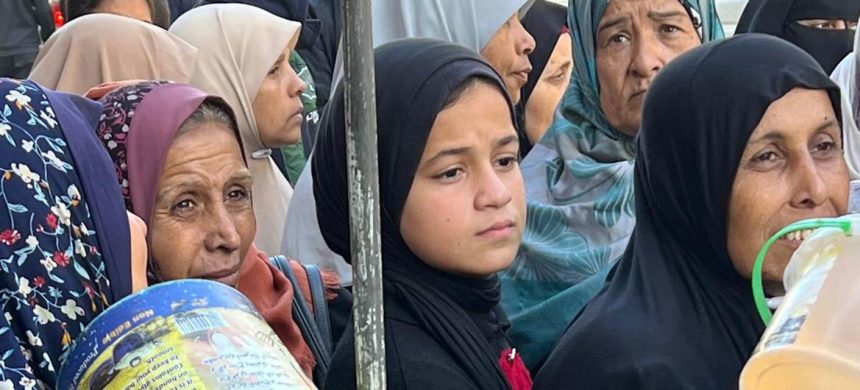
Describing the level of devastation across the Gaza Strip as “absolutely staggering”, the Head of Emergency Communications for the World Food Programme (WFP) has told UN News in an interview that civilians are desperate for lifesaving aid and there’s a growing risk of widespread famine.
Speaking from Gaza, Jonathan Dumont said many people have been displaced multiple times, and that families are living either in tents or in the rubble of collapsed buildings, with no access to electricity or running water.
The text has been edited for length and clarity.
UN News: How do you describe the situation on the ground in Gaza, after more than a year since the war erupted there?
Jonathan Dumont: The devastation is absolutely staggering. This year, I’ve been to Goma, Port-au-Prince, Khartoum, a lot of different places where people have issues gAlmost everyone has lost their home. In the south, a lot of people are living in tents, and with the winter coming, you have rain and wind blowing them over, flooding them. Most kids don’t have shoes.
A lot of people feel they have no choice but to go back to their homes, which are quite frequently, literally rubble. I met a few families who are living in basically the cement blocks that have collapsed over them, and there’s no electricity, running water or sewage. This is the second winter for many of them that they’re homeless.
UN News: You’ve been to the northern part of Gaza. Can you tell us more about what you saw there?
Jonathan Dumont: I’ve been to Gaza City, although I didn’t go to the areas in the far north. Gaza City is a huge city but many of the buildings have been destroyed. Before you had villas, beach cabanas and a fishing port, and now it is just a ghost town.etting food or have been displaced. But in Gaza, I haven’t met anyone who hasn’t been displaced at least two or three times, due to military activity.